


The Man Who Broke the Billion-Dollar Ceiling: Elon Musk Is Now Worth $1 Trillion
A warehouse startup in El Segundo. A dream about Mars. And now, history.
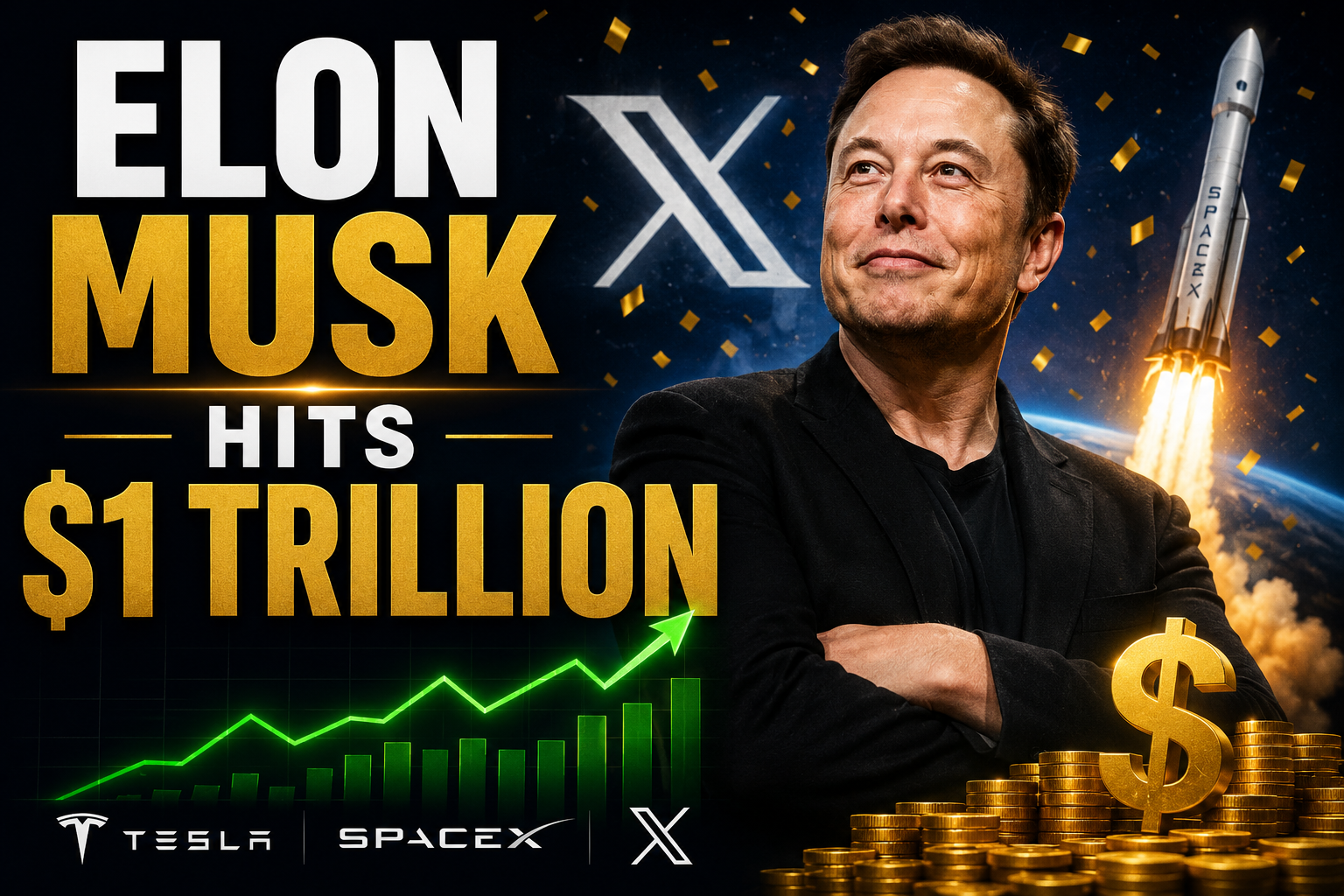
On Friday, 12 June 2026, Elon Musk did something no human being has ever done before. He crossed the one trillion dollar mark in net worth — officially becoming the world’s first trillionaire, moments after SpaceX shares began trading on the Nasdaq under the ticker “SPCX.” The event, years in the making and breathlessly anticipated by Wall Street, marked the close of an era in which billionaires competed at the top — and the beginning of something the financial world has no real vocabulary for yet.
The SpaceX IPO raised a record $75 billion, valuing the company at approximately $1.8 trillion — the largest public market debut in history, surpassing Saudi Aramco’s $29 billion raise in 2019 by a distance that would have seemed absurd even five years ago. Musk’s stake in SpaceX, combined with his holdings in Tesla and other assets, pushed his estimated net worth to around $1.1 trillion.
How Did We Get Here? The Road to the SpaceX IPO
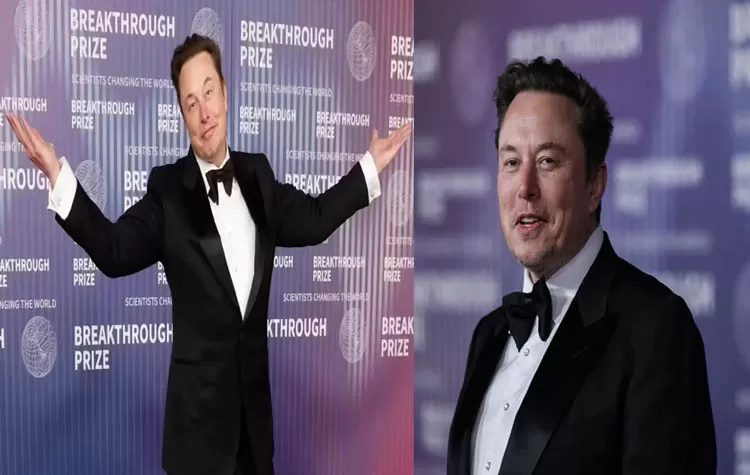
For years, Musk resisted taking SpaceX public. He argued, repeatedly and publicly, that the pressures of quarterly earnings reports and shareholder expectations would slow down the kind of long-term, high-risk moonshots — literally — that the company needed to pursue.
Then things changed.
Between the start of 2025 and March 31, 2026, SpaceX lost $8.7 billion as it poured capital into ambitious projects: space-based data centres, artificial intelligence through its xAI segment, and the continued development of Starship — the most powerful rocket ever built. The company needed money, and the public markets were the logical answer.
READ MORE : Supergirl Movie 2026: Everything Fans Have Been Waiting For
SpaceX priced its IPO at $135 per share, but shares opened at $150 — roughly 11% above the offering price — signalling the kind of retail and institutional hunger that had been building for months. Reuters reported that the company attracted more than $250 billion in orders, while retail investors alone submitted more than $70 billion in requests for shares.
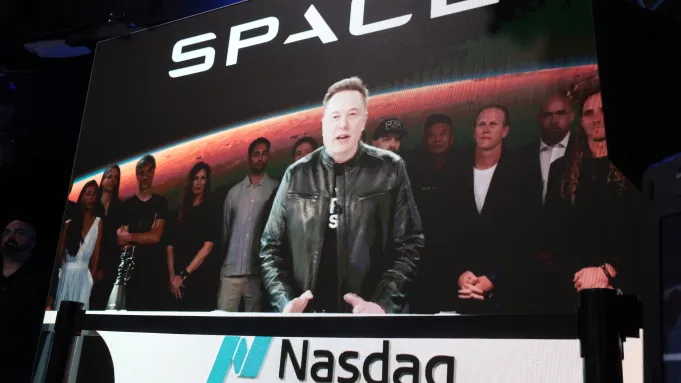
In Texas, at the company’s Starbase facility, Musk helped ring the Nasdaq opening bell remotely. “It is certainly hard to believe that a little company that started in a warehouse in El Segundo is now going public with the largest IPO ever,” he said.
What Does a $1.1 Trillion Net Worth Actually Look Like?
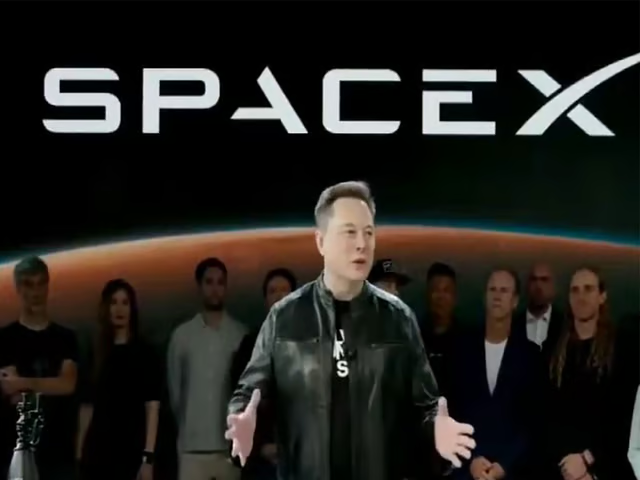
Musk’s net worth now exceeds the combined wealth of the next three names on the Bloomberg Billionaires Index — Google co-founders Larry Page and Sergey Brin, and Amazon’s Jeff Bezos. As a trillionaire, Musk is worth roughly seven Warren Buffetts, who sits at approximately $145 billion.
With $1 trillion, Musk has around $200 billion more than NASA has spent since its inception in 1958. He could cover the US space agency’s entire 2025 budget of $24.6 billion using less than 3% of his net worth.
And consider this: as recently as the summer of 2024, Musk, Jeff Bezos, and Bernard Arnault were swapping the title of world’s richest person on a near-daily basis, with net worths hovering around $200 billion. In less than two years, Musk has gone from that three-way race to a league entirely his own.
SpaceX: The Numbers Behind the Nasdaq Debut
Not everyone is celebrating. Analysts at Morningstar — a research firm that does not earn investment banking fees — called the IPO “significantly overvalued.”
SpaceX’s IPO valuation was priced at roughly 94 times revenue, compared with Meta at 22x and Amazon at 18x when they went public. Morningstar analysts estimated the company’s 2035 earnings before interest and taxes would need to grow 75-fold from 2025 levels to justify the valuation. They put the company’s fair value at $780 billion — less than half of what the market assigned it on day one.
Still, the financials tell a story of genuine momentum:
- SpaceX revenue reached $18.7 billion in 2025, up 33% from the previous year
- Nearly a quarter of that revenue came from Starlink, the satellite internet service that now counts millions of subscribers globally
- The company posted a net loss of $4.9 billion in 2025, reflecting heavy investment in future infrastructure
- The xAI segment — which includes X, the platform formerly known as Twitter — posted a $6.36 billion operating loss on $3.2 billion in revenue in 2025
The losses are significant, but investors appear to be pricing in potential, not present profitability. That’s a familiar gamble with tech — and one that has paid off spectacularly in the past.
Starlink: The Quiet Engine Powering Musk’s Empire
While Starship grabs the headlines, Starlink is the business. The satellite internet service has grown into one of the most strategically important telecommunications networks on the planet — used by governments, militaries, humanitarian organisations, and ordinary consumers in areas traditional internet providers have never reached.
It’s also the most defensible part of SpaceX’s business model. Building and launching thousands of satellites into low-Earth orbit requires an upfront investment that virtually no competitor can match. That near-monopoly on the technology has been a consistent talking point from analysts who believe the SpaceX valuation, however stretched, is not entirely without foundation.
The revenue from Starlink continues to scale, and if the service reaches projected subscriber counts over the next decade, it alone could justify a significant portion of the company’s current market cap.
What Comes Next for SpaceX — and Musk?
Going public changes things. SpaceX will now be subject to quarterly earnings scrutiny, SEC regulations, and the expectations of millions of public shareholders — a dynamic that Musk himself spent years trying to avoid.
Musk reiterated on the day of the IPO his goal of making life multi-planetary. “Not just a few astronauts — I mean literally you,” he told the audience at Starbase.
Whether public market pressures will accelerate or constrain that vision remains an open question. Analysts have noted that SpaceX’s most ambitious projects — orbital data centres, Mars colonisation, next-generation Starship flights — are long-horizon bets that don’t map neatly onto the timelines Wall Street typically demands.
The SpaceX IPO is also coming ahead of expected public offerings from two AI giants, Anthropic and OpenAI, both of which have filed confidential paperwork with the SEC for their own listings. Whether Musk’s market debut sets the tone or an unreachable benchmark for those filings is something the tech industry is watching closely.
A Historic Milestone — With Serious Questions Attached
There’s no denying the scale of what happened on 12 June 2026. A single individual has accumulated more wealth than most sovereign nations hold in reserves. The Elon Musk trillionaire SpaceX IPO moment will almost certainly be studied in business schools for decades — as both a case study in bold vision and a cautionary tale about market exuberance.
Musk’s defenders argue that his wealth is tied up in companies actively building infrastructure for the future — rockets, satellites, electric vehicles, and artificial intelligence. His critics point out that trillion-dollar paper fortunes built on loss-making companies are, at minimum, worth scrutinising closely.
Both arguments are probably right.
What’s certain is that the financial world has entered territory it has never mapped before. The first trillionaire is here. He owns roughly 40% of the company that put humanity’s first reusable orbital rocket back on the launch pad — and he’s already talking about Mars.
Final Thought!
The SpaceX IPO has done more than list a rocket company on a public exchange. It has redrawn the map of human wealth, placing Elon Musk in financial territory no person has ever occupied. From near-bankruptcy in 2008, when both SpaceX and Tesla were days from collapse, to a net worth of $1 trillion in 2025 — the arc of this story is, by any measure, extraordinary.
Whether you view Musk as a visionary or a controversial figure, the economic reality of this milestone demands attention. It raises fundamental questions about wealth concentration, the future of the space economy, and what it means when a single individual commands resources on the scale of a nation.
What do you think about Elon Musk becoming the world’s first trillionaire? Is this the natural result of building transformational companies, or does it signal something that policy-makers need to address? Share your thoughts in the comments below.
