


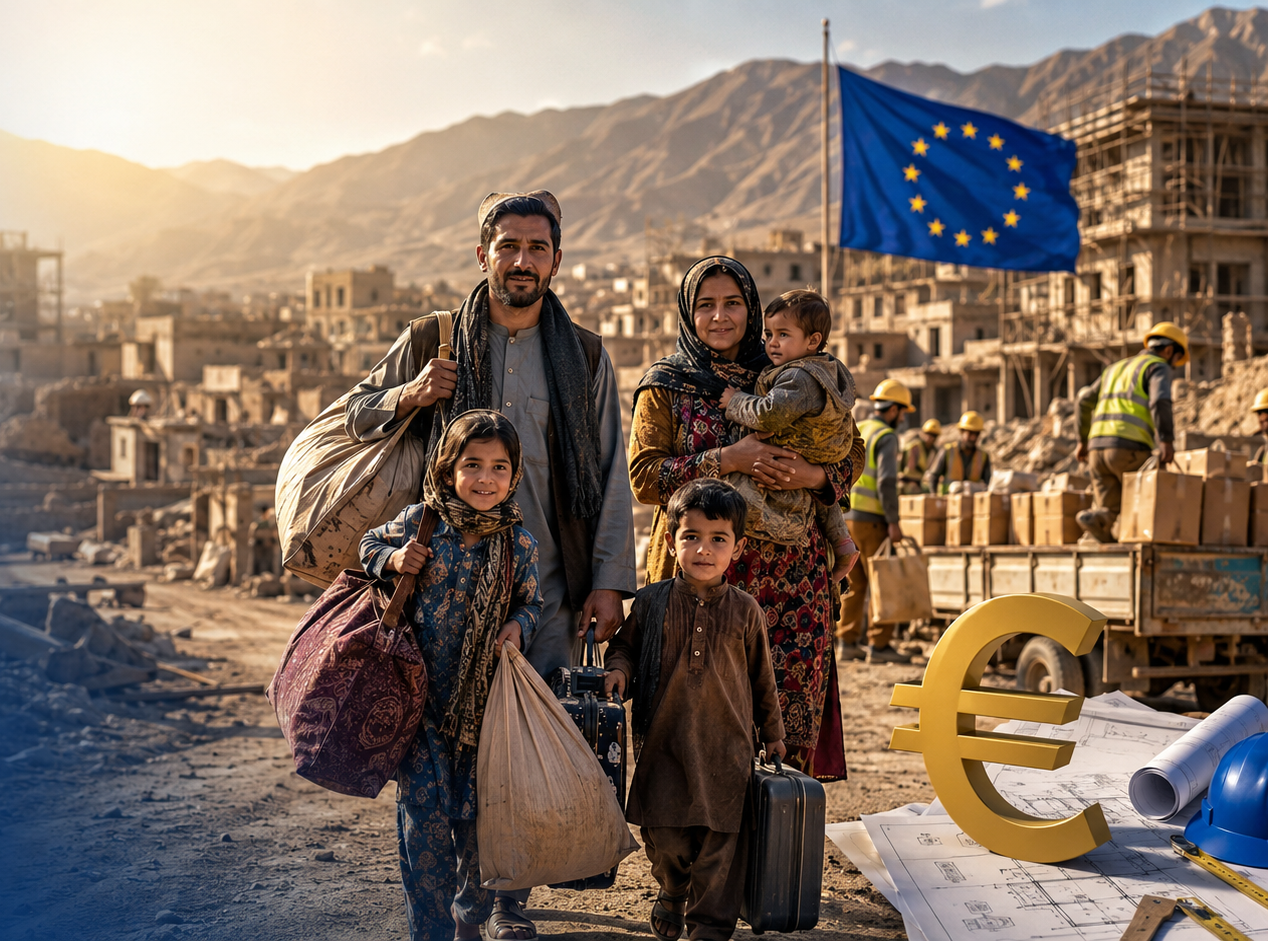
Millions Forced Back to Afghanistan — Now the EU Is Stepping In With €20 Million
More than two and a half million Afghans returned from Iran and Pakistan in 2025 alone. Many came back with nothing — no savings, no housing, no plan. Now, the European Union has announced a significant new injection of cash to help those people get back on their feet.
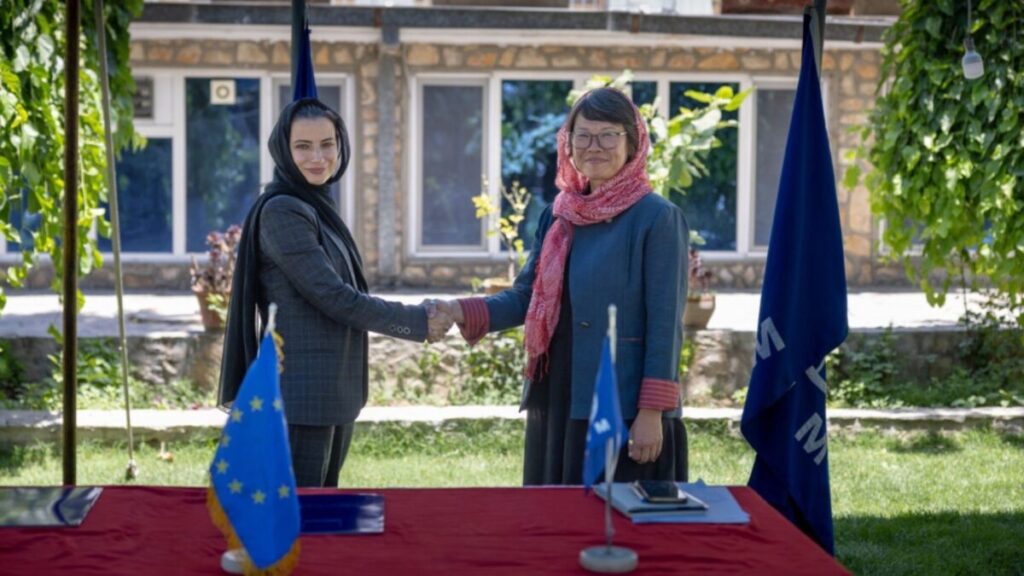
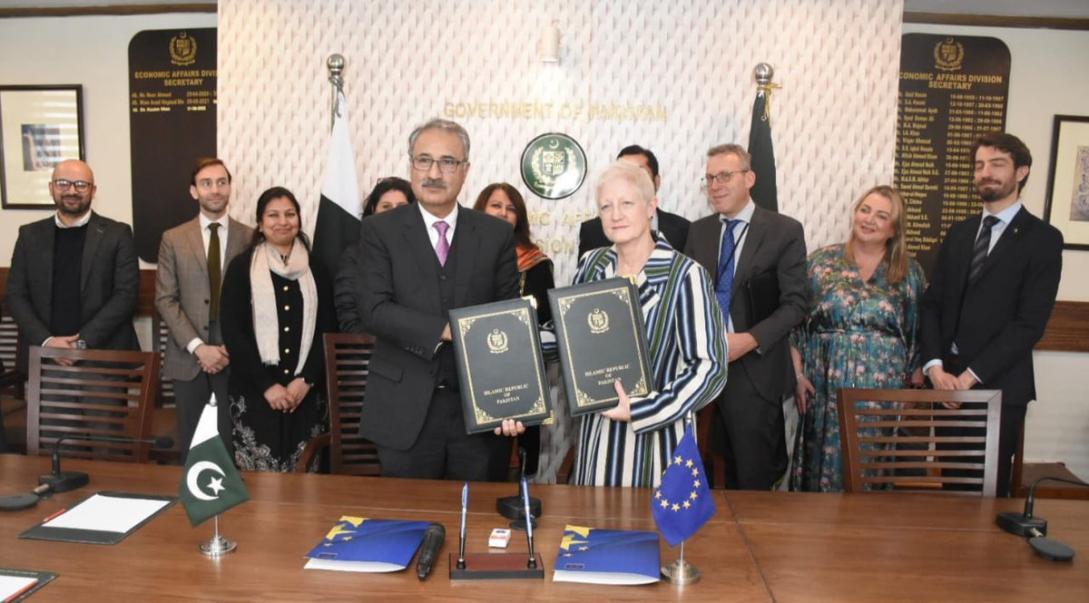
On 21 June 2026, the EU confirmed it is making available €20 million for the International Organization for Migration (IOM) to scale up assistance for displaced people and returnees across high-return areas in Afghanistan. The announcement comes as the country continues to grapple with what international agencies are calling one of the most complex humanitarian emergencies anywhere in the world.
What Is Driving This Crisis?
To understand why this funding matters, you first need to understand the sheer scale of what Afghanistan is dealing with right now.
From September 2023 to May 2026, more than 6.04 million migrants were deported from Iran and Pakistan and returned to Afghanistan. According to IOM figures, the organisation estimates these returns have increased Afghanistan’s population by at least ten percent.
Many of those arriving return with limited financial resources and face serious difficulties accessing housing, employment, and basic services. These are not abstract statistics. These are families who spent years, sometimes decades, building lives in neighbouring countries — and who have now been forced home to communities that are already stretched thin.
In 2026, the United Nations estimates that more than 21.9 million people require humanitarian assistance in Afghanistan. Unemployment, debt, and poverty remain widespread, affecting nearly half the population, while millions do not have access to safe water, sufficient food, or adequate healthcare.
Against that backdrop, each additional wave of returnees adds fresh pressure to an already collapsing system.
What Will the €20 Million Actually Fund?
This is not symbolic money. The EU has laid out a fairly detailed breakdown of how the funds through the IOM will be used on the ground.
The funding will expand integrated support for returnees, internally displaced people, and host communities through protection services, health, psychosocial support, livelihoods, and recovery programmes in high-return areas and provinces.
In practical terms, that breaks down into several key areas:
- Healthcare access — medical support for returning families who arrive in poor health after long journeys
- Psychosocial assistance — counselling and mental health support for those who have experienced trauma during deportation or displacement
- Vocational training — skills-building programmes to help returnees become economically active
- Small business support — assistance for SMEs to help families generate sustainable income
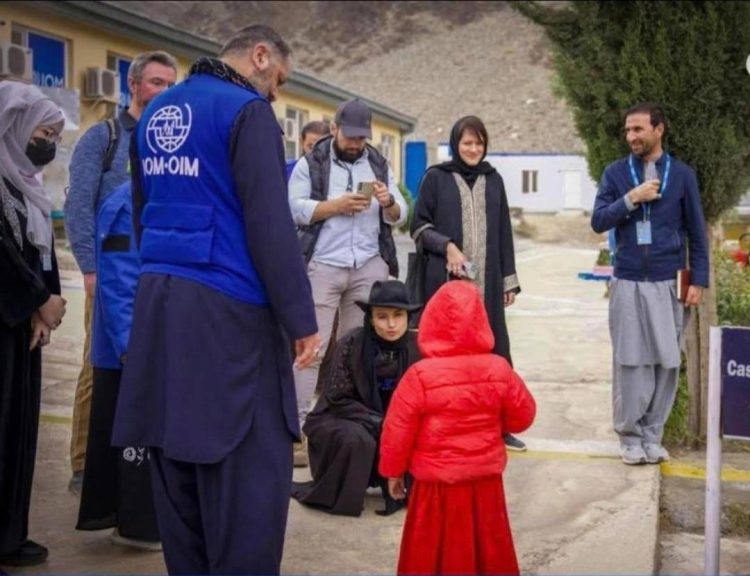
- Legal aid and counselling — through IOM’s Community Resource Centres, returnees can access legal guidance, documentation support, and protection referrals
The new funding will also strengthen IOM’s network of Community Resource Centres, which provide information, counselling, legal aid, protection services, and health support to returnees and vulnerable communities across Afghanistan.
A Particular Focus on Women and Vulnerable Groups
One aspect of this programme that has been repeatedly highlighted by both EU and IOM officials is the emphasis on women and other vulnerable groups — and this reflects a broader and deeply troubling reality inside Afghanistan today.
Women and girls remain subject to strict restrictions on education, employment, and other basic rights, limiting household income and access to basic services for many families. For women returning from Iran or Pakistan — countries where they may have had far greater freedoms — the adjustment can be especially brutal.
READ MORE: Afghan Women Under Taliban Rule: 5 Years of Silence
Livelihood support, vocational training, and assistance for small and medium enterprises are designed specifically to facilitate the sustainable reintegration of returnees, with a particular focus on women and other vulnerable groups.
This targeted approach signals that the EU and IOM are not simply providing blanket relief. They are trying to build pathways toward genuine economic independence — especially for those who face the most structural barriers once they return.
What EU and IOM Officials Are Saying
Veronika Bošković Pohar, the Chargée d’Affaires of the EU Delegation to Afghanistan, put the bloc’s position clearly in a statement accompanying the announcement.
“The European Union remains firm in its commitment to support the reintegration of returnees in Afghanistan, helping them transition from dependency towards self-reliance. Our partnership with IOM is central to this effort. Since 2022, the European Union has mobilised more than €140 million to respond to the displacement crisis in Afghanistan through the provision of multisectoral assistance.”
That figure — €140 million since 2022 — puts the latest €20 million in context. This is not a one-off intervention. It is part of a sustained, long-term commitment that the EU has maintained even as other major donors have scaled back.
IOM’s Deputy Chief of Mission in Afghanistan, Mutya Maskun, also spoke to the scale of what is needed on the ground.
“At a time when millions of Afghans continue to return to communities already struggling with limited resources and services, this contribution will enable IOM to expand critical support, strengthen livelihoods, support small businesses, and enhance access to essential services through Community Resource Centres, helping returnees and host communities build more resilient futures.”
The Bigger Picture: Afghanistan’s Humanitarian Funding Gap
It is worth stepping back and looking at where this latest announcement fits within the overall EU funding picture for Afghanistan — because the numbers tell an important story.
In 2025, the EU allocated over €161 million in humanitarian aid to Afghanistan, and for 2026 the initial allocation has reached €162 million so far. The bloc has funded humanitarian operations in Afghanistan since 1994, with total historic contributions of around €2.1 billion.
But even that commitment is not keeping pace with the scale of need. The humanitarian community has faced new challenges since the Taliban takeover in 2021, compounded by wide-reaching funding cuts from previously major humanitarian donors in 2025. The exit of other large funders has placed even greater weight on the EU to hold the line.
International organisations have repeatedly warned that pressure on public services has intensified as deportations and voluntary returns from neighbouring countries continue. Humanitarian agencies say sustained international support is critical to preventing further deterioration in living conditions.
Host Communities Under Pressure Too
One thing that often gets missed in coverage of the Afghan returnee crisis is the impact on the communities receiving them — not just the returnees themselves.
Some communities are facing return inflows that amount to more than half of their existing population. Villages and districts that were already managing with minimal services are suddenly absorbing thousands of new arrivals. Schools, clinics, water systems — none of this infrastructure was built to handle this kind of rapid population growth.
The EU funding through IOM specifically targets host communities alongside returnees, recognising that sustainable reintegration is only possible when both sides of the equation are supported.
The IOM said the funding will strengthen support mechanisms for communities struggling to absorb large numbers of returnees, while also addressing the needs of internally displaced families across the country.
Will This Be Enough?
That is the honest question hanging over all of this.
Human rights organisations and international aid agencies have repeatedly called on Pakistan and Iran to halt forced returns. They warn that returnees — particularly women, journalists, activists, and former government officials — risk security threats and possible retaliation upon re-entering Afghanistan.
EU funding for Afghan returnees, however generously structured, cannot resolve a political crisis. It cannot reopen girls’ schools, restore women’s employment rights, or reverse Taliban governance policies. What it can do is provide a buffer — a layer of support that gives returning families a slightly better chance of surviving the transition back to a country that has fundamentally changed.
Food insecurity in Afghanistan has sharply deteriorated in 2026, with an estimated 13.78 million people projected to face acute food insecurity — meaning they struggle to secure enough food for survival. Against that backdrop, €20 million is meaningful. But humanitarian agencies are clear that it is not sufficient on its own.
The programme is being implemented in coordination with UN partners and other actors, with IOM leading data-driven response planning and humanitarian coordination — a sign that there is at least some attempt to spend what is available as efficiently as possible.
What Comes Next
The EU’s latest contribution to Afghan returnee support will not be the last word on this crisis. With mass deportations from Iran and Pakistan showing no sign of slowing, and with Afghanistan’s domestic economy unable to absorb millions of returning citizens, the pressure on international donors will only grow.
What this announcement does confirm is that the European Union remains one of the few major international actors maintaining consistent, large-scale engagement with the Afghan humanitarian crisis. At a moment when other donors have pulled back, that consistency matters.
For the millions of Afghan families caught between forced deportation and an uncertain future at home, this EU funding for Afghan returnees represents one of the few concrete lifelines currently available.
Have a story tip or want to share your perspective on the Afghan humanitarian crisis? Reach out to the NewsVorra editorial team or leave a comment below. Follow our International Affairs section for continued coverage of developments in Afghanistan and across South and Central Asia.
