


Sweden Sends $5.26 Million Lifeline to Afghanistan as UN Warns Aid Has Hit “Lowest Level in Years”
Sweden has just handed over roughly £4.1 million to keep Afghanistan’s humanitarian machinery running. It sounds like a lot. Against what’s actually needed, it barely scratches the surface.
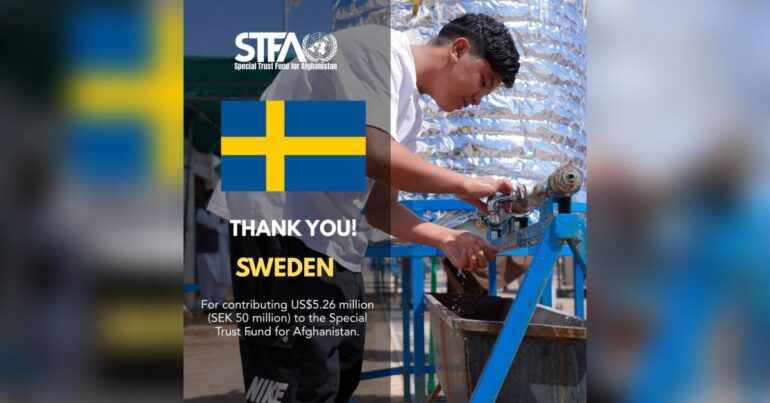
The Scandinavian nation transferred 50 million Swedish kronor, about $5.26 million, to the United Nations Special Trust Fund for Afghanistan (STFA) this week. The fund confirmed the contribution in a post on X, thanking Stockholm for what it called a generous gesture at a critical moment.
For British South Asian families with roots in Afghanistan or Pakistan’s border regions, this isn’t an abstract donation. It’s the difference between a clinic staying open and a clinic shutting its doors.
What Happened
The STFA announced the donation on Wednesday, writing that pooling resources allows aid workers to reach more communities with the support they need to build a more resilient future.
It’s the second major Swedish contribution to the fund this year. Stockholm sent $6.4 million in January, and now another $5.26 million has followed, cementing Sweden’s position as one of the most consistent donors to Afghanistan since the Taliban takeover.
The money isn’t handed to Kabul’s administration. It flows through the fund, which supports projects focused on basic services, livelihoods, food security, community resilience and the empowerment of women, while bypassing Taliban institutions.
That distinction matters. Donor governments have consistently structured their support this way, insisting aid must reach ordinary Afghans without strengthening the Taliban’s grip on power.
Why the Fund Exists
The United Nations Special Trust Fund for Afghanistan was established in 2021 to channel international assistance through UN agencies after the Taliban returned to power.
Nearly 20 UN agencies operate under its umbrella, coordinating everything from emergency food drops to livelihood programmes for displaced families. It was designed to fill the vacuum left when most Western governments cut direct government-to-government cooperation.
Since then, it’s become one of the few functioning bridges between international donors and Afghan communities. But the bridge is creaking.
The Numbers Behind the Crisis
Here’s where the story turns grim. This single donation, however welcome, sits inside a much bigger funding collapse.
- Nearly 22 million people, close to half of Afghanistan’s population, need humanitarian help this year, and women and children make up most of that group.
- The World Food Programme has flagged that around 5 million women and children are facing acute malnutrition, described as the worst surge on record.
- The UN appealed for $1.71 billion for Afghanistan in 2026. By early June, only about $269 million had actually arrived, roughly 16% of the target, according to OCHA figures. A more recent tally from the Norwegian Refugee Council puts the funded share at closer to 17%.
- Afghanistan’s response plan is now among the five least-funded in the world, alongside Yemen, Niger, Burkina Faso and Mali.
Put simply: for every six dollars Afghanistan needs this year, only one has shown up.
Why the Money Is Drying Up
A lot of this traces back to one decision. The decline in aid to Afghanistan is due to the suspension of U.S. humanitarian support, and until 2024, the United States had provided more than 40 percent of all humanitarian funding for Afghanistan.
That gap hasn’t been filled. Other donor nations, stretched by their own domestic pressures and competing crises from Sudan to Gaza to Ukraine, have simply not stepped up at the same scale.
READ MORE: EU Pledges €20 Million to Help Afghan Returnees Rebuild
Layer on top of that a wave of returnees. UNHCR figures show that in 2025 alone, roughly 2.8 million Afghans were pushed back into the country from Iran and Pakistan, many with nothing but the clothes they were wearing. That’s added fresh strain on services already running on fumes.
Expert Reaction
Jan Egeland, Secretary General of the Norwegian Refugee Council, didn’t mince words when his organisation released its annual neglected crises report this week.
“Countries must allocate funding based on the level of need, not their own geopolitical and nationalistic interests. They must not simply focus on those featured on the frontpages. We commend the effort of Sweden who continue to give based on the objective assessment of needs, and hope others will follow suit,” Egeland said.
He went further in comments carried by regional outlets, warning that without urgent action, millions more people could be pushed into hunger and desperation.
For the first time since NRC began tracking neglected crises, Afghanistan has been included on the organization’s list of the world’s most neglected crises— a grim milestone for a country that once dominated Western headlines and defence budgets.
The Diaspora Angle
For NewsVorra readers with family links across Afghanistan and the wider region, these figures aren’t just statistics on a UN dashboard.
Many British Pakistani and British Afghan households still send remittances home, still track news from Kabul, Kandahar and Nangarhar through relatives on WhatsApp. When international funding shrinks, the burden often quietly shifts onto exactly these family networks.
The UK itself has scaled back its own humanitarian aid budget in recent years as it redirects spending toward defence and domestic priorities, a trend mirrored across much of Europe. Sweden’s move, while modest in global terms, stands out precisely because it bucks that pattern.
What Happens Next
Aid agencies aren’t expecting a sudden turnaround. OCHA has already trimmed its global 2026 appeal, and UN officials privately admit that unless major donors return to the table, further cuts to food distribution and healthcare access in Afghanistan are likely before the year is out.
The STFA will keep pushing smaller donors like Sweden, Norway and Italy to plug gaps left by bigger powers. Whether that’s enough to stop the malnutrition figures climbing further is the real question nobody in Geneva or New York can answer with confidence right now.
Do you think wealthier nations have a moral duty to keep funding Afghanistan’s humanitarian response, even years after Western troops withdrew? Let us know your thoughts.
