


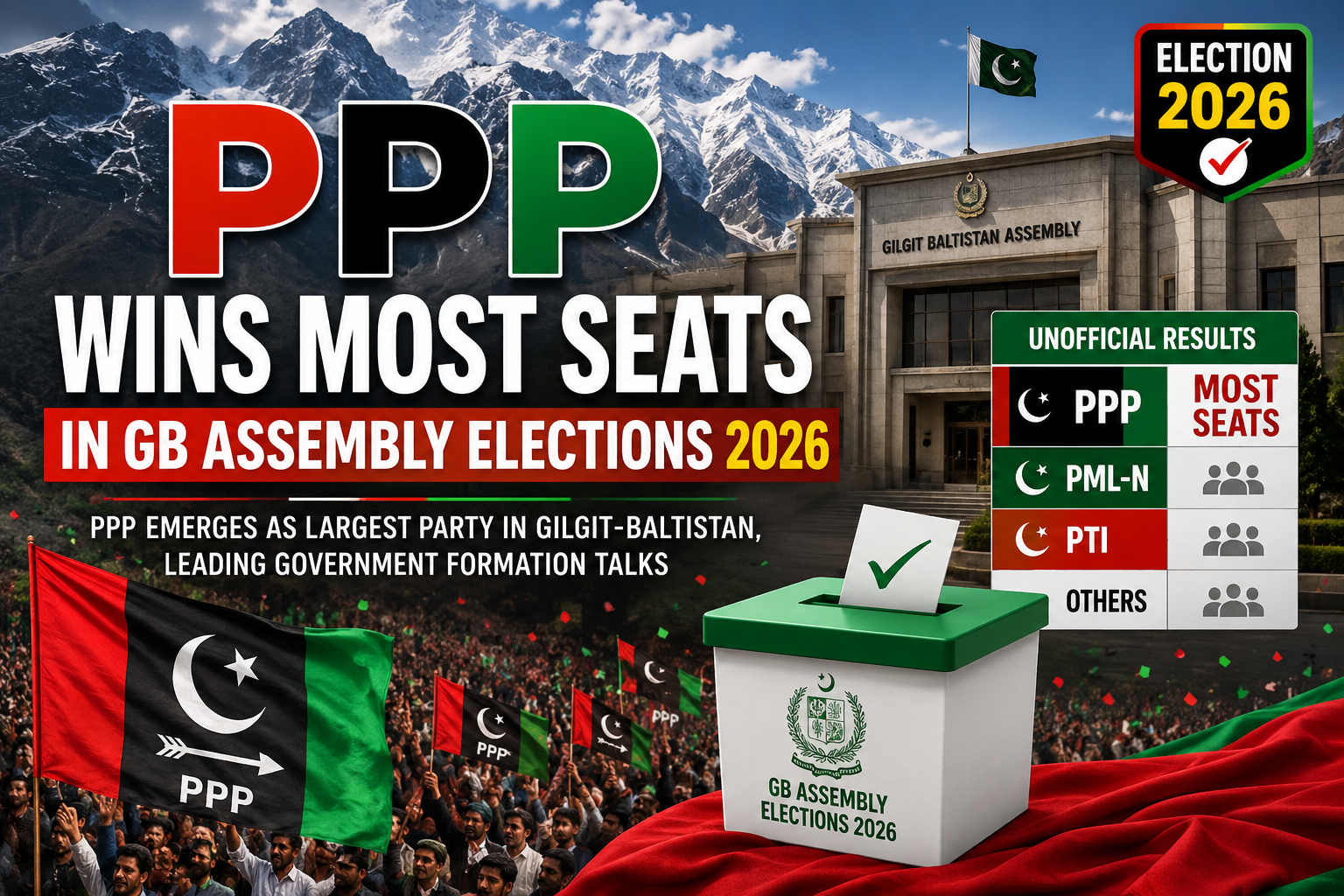
PPP Wins the Most Seats in GB Assembly 2026 — But the Real Battle Is Just Beginning
The people of Gilgit-Baltistan cast their votes on Sunday, 7 June 2026 — and when the dust settled, one thing was clear: the Pakistan Peoples Party had come out on top. PPP emerged as the largest party in the Gilgit-Baltistan Assembly elections, though it fell short of a majority, setting off an intense round of behind-the-scenes coalition talks that political analysts say could define the region’s future for the next five years.
It was a historic moment for the party — and a nail-biting one. With seats trickling in across 24 constituencies throughout Sunday evening, PPP Chairman Bilawal Bhutto Zardari was already making his move, taking to social media with confidence and a sense of victory in his words. The party’s “arrow” symbol, he declared, had rained across the mountains of Gilgit-Baltistan.
But here’s the thing winning the most seats and forming a government are two very different things. And right now, the independents hold the key.
How Many Seats Did PPP Win in the GB Assembly?
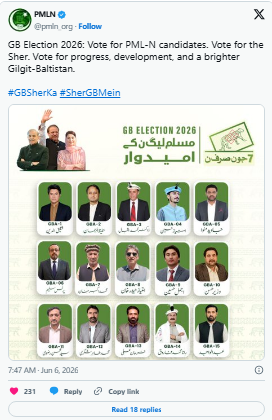
Unofficial and preliminary election results for 24 seats of the Gilgit-Baltistan Legislative Assembly showed that PPP led the race with success in 10 constituencies.
Second in the race was PML-N with six seats, while independent candidates — including two PTI-backed ones — emerged victorious in seven constituencies. Majlis Wahdat-i-Muslimeen (MWM) managed to win just one seat.
For context, the Gilgit-Baltistan Assembly has a total of 33 seats: 24 are general seats directly elected by the public, six are reserved for women, and three are carved out for technocrats and professionals. To form a government, a party or coalition needs at least 17 seats.
So while PPP’s tally of 10 general seats is a strong showing, it still leaves the party several short of that magic number. The reserved seats — allocated proportionally after the general seat count is finalised — will add to their total. But coalition arithmetic will ultimately decide who takes the chief minister’s chair.
Bilawal Speaks: “The Arrow Is Raining in Gilgit-Baltistan”
PPP Chairman Bilawal Bhutto Zardari vowed to attempt to form the government in Gilgit-Baltistan. In a post on social media platform X, he wrote: “Gilgit-Baltistan mein teeron ki barish. The Pakistan Peoples Party is emerging as the single largest party and we will be attempting to form government. I am grateful to the people for their trust and congratulations to Jiyalas on their victory.”
It was a characteristically confident statement from the PPP chairman. His party’s performance in the high-altitude constituencies of Skardu, Nagar, Shigar, and Ghizer gave them a foothold across multiple districts — not just in Gilgit city — which strengthens their negotiating hand significantly.
Who Won What: A Seat-by-Seat Breakdown
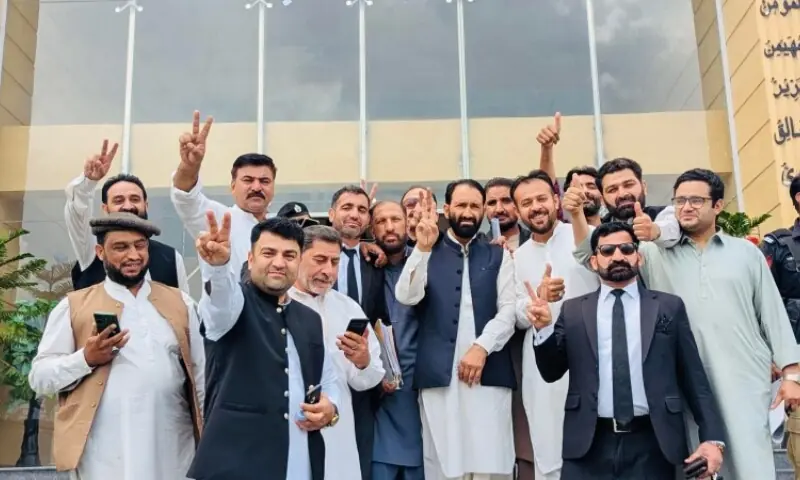
Here is a look at the declared results from key constituencies across Gilgit-Baltistan:
PPP Victories:
- GBA-1 Gilgit-I: PPP’s Amjad Advocate secured victory with 10,594 votes, while PML-N’s Shafiq-ud-Din came second with 6,316 votes.
- GBA-4 Nagar-I: PPP’s Muhammad Ali Akhtar won with 7,654 votes, defeating Islami Tehreek candidate Muhammad Ayub Waziri, who received 6,597 votes.
- GBA-7 Skardu-I: PPP’s Tauqeer Mehdi Shah secured victory with 4,320 votes, followed by Istehkam-e-Pakistan Party’s Raja Jalal with 3,891 votes.
- GBA-12 Shigar: PPP’s Imran Nadeem secured victory with 12,944 votes, followed by ITP’s Raja Azam with 8,682 votes.
- PPP also claimed victories in GBA-5, GBA-9, GBA-10, GBA-11, and GBA-19.
Independent Winners:
- GBA-6 Hunza: Independent candidate Nek Nam Karim won with 6,390 votes, while PPP’s Colonel (R) Imtiaz-ul-Haq finished second with 5,417 votes.
- GBA-21 Ghizer-III: Independent candidate Aman Ali Amir won the seat with 9,938 votes.
- Independent candidates also won GBA-3, GBA-23, and GBA-24.
PML-N Victories:
- GBA-18 Diamer-IV: PML-N’s Kifayat-ur-Rehman secured victory with 5,521 votes.
- GBA-20 Ghizer-II: PML-N’s Abdul Jehan won with 6,917 votes, narrowly ahead of PPP’s Nazir Ahmed who received 6,758 votes.
- PML-N also won GBA-22.
MWM:
- In GBA-8 Skardu-II, MWM’s Kazim Meesam won with 10,658 votes.
The Independents: Kingmakers of Gilgit-Baltistan
Perhaps the most talked-about dynamic of this election is not the PPP’s victory, but the outsized role that independent candidates now play in determining who actually governs.
A total of 403 candidates took part in the elections, including 396 men and 8 women. The total number of registered voters in the region was 963,034, including 566,097 male and 396,937 female voters.
The Pakistan Tehreek-e-Insaf participated mainly through independent candidates due to symbol-related issues in several constituencies, and still maintained influence in Gilgit, especially in GBA-2.
Many of the independents who won are understood to have PTI sympathies. Whether they align with PPP, PML-N, or form their own bloc will be the defining question of the next few days. Political sources suggest that both PPP and PML-N have already begun outreach to winning independents, with offers of ministerial positions reportedly on the table.
Election Day: How It All Unfolded
The polling process began at 8am and continued till 5pm without any break on Sunday. GB Chief Election Commissioner Raja Shahbaz visited various polling stations to review the voting process and monitor conduct across different stations.
The GB CEC stated that the law and order situation remained satisfactory throughout the day.
That said, not everyone was fully satisfied. PPP leaders raised concerns over delays in the issuance of Form-45 during the Gilgit-Baltistan Assembly elections. PPP Parliamentarians’ Secretary General Nayyer Hussain Bukhari said that Form-45 was not being provided and claimed that party representatives were being asked to leave polling areas.
PPP leader Qamar Zaman Kaira said he had spoken to the election commissioner regarding the issuance of Form-45, stating that results given by the public should be reflected accurately and urging party workers to remain peaceful at polling stations.
Despite these concerns, voting itself proceeded without any major incident — a notable achievement for a region that has sometimes seen electoral tensions in past cycles.
What Happens Next: Government Formation
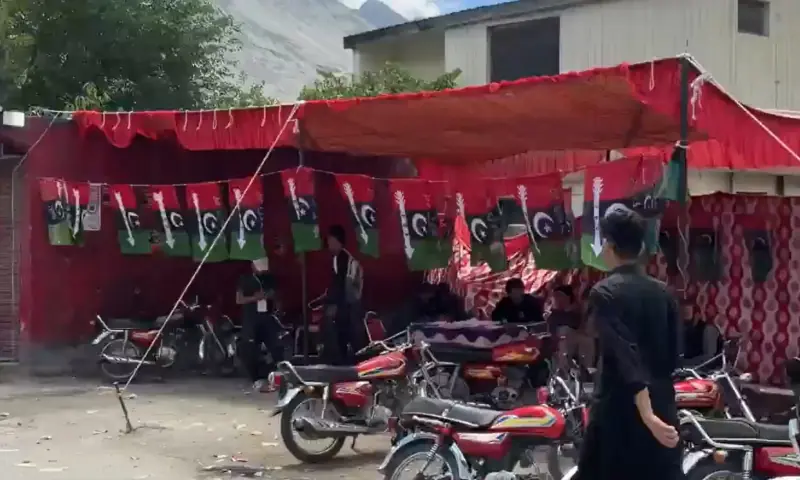
This is where things get genuinely complicated.
PPP has won the most PPP seats in GB Assembly elections, but 10 out of 24 general seats is still well below the 17-seat threshold needed to govern outright. Independent candidates are expected to play a potentially decisive role in government formation, and both major parties are keenly aware of that reality. Arab News
PPP’s reserved seats for women and technocrats — allocated proportionally — will increase their numbers. But the mathematics still make coalition talks unavoidable. Bilawal has made his intent clear: he wants to be in power in GB. What remains to be seen is which independents come his way, and at what price.
Political watchers are also keeping an eye on PML-N’s response. With six general seats and a strong showing in districts like Diamer and Ghizer, PML-N is not out of the game. A PML-N and independent alliance is mathematically possible — though it would be an uphill task given PPP’s larger base.
A Divided Mandate — But a Clear Signal
The 2026 Gilgit-Baltistan elections have produced a fragmented result, but within that fragmentation lies a clear message from voters: PPP is the preferred choice for a plurality of GB’s electorate.
The party’s wins span multiple districts — Gilgit, Nagar, Skardu, Shigar, and Ghizer — suggesting broad geographic support rather than a narrow regional stronghold. That kind of spread is politically significant. It means PPP can claim a genuine mandate, even if not an absolute one.
READ MORE: Elon Musk Hits $1 Trillion: World’s First Trillionaire After Massive SpaceX IPO
For Bilawal Bhutto Zardari, these elections are also personally meaningful. As his party navigates coalition politics at the federal level, a strong GB showing adds to his credibility and demonstrates that PPP’s support base extends into Pakistan’s most remote — and strategically important — territories.
Final Thought! The Arrow Has Landed, But the Game Isn’t Over
The GB Assembly election of June 2026 has delivered its verdict: PPP wins the most seats and enters government formation talks from a position of strength. But Gilgit-Baltistan’s complex political terrain, where independents can outnumber any single party, means nothing is settled yet.
In the coming days, expect intense negotiations, surprise alliances, and perhaps a few political u-turns. The real story of who runs Gilgit-Baltistan is still being written — one horse-trade at a time.
Stay with NewsVorra for the latest updates on GB election results, government formation, and political developments from across Pakistan.
